Quick Lick 15 – Six Turnarounds

June 25, 2026 / Beginner / Slow Blues 

In this lesson I want to show you an easy turnaround pattern in the key of E that can be played several different ways. These sound great and are not that hard to play. You’ll hear this type of turnaround used at the end of Bring It On Home by Led Zeppelin.

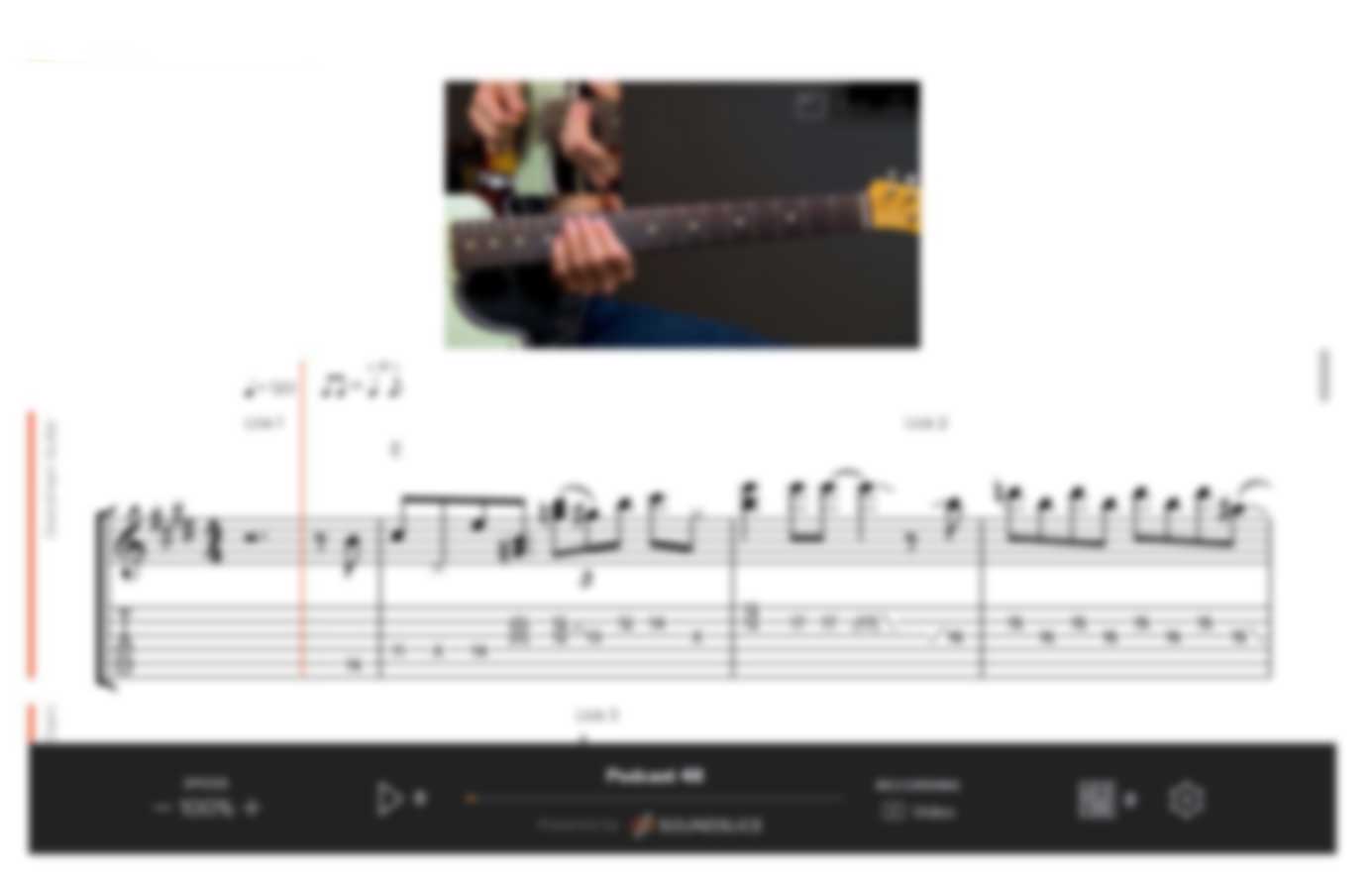
Full Lesson, Interactive Tab, Guitar Pro, and Backing Track

Gain Instant access when you become an All Access Pass Subscriber. Learn more about All Access

Read Full Transcript

Hey guys, John here from LearningGuitarNow.com, and in this lesson I want to show you an easy blues turnaround that you can play in the key of E. It's pretty easy to do, and this occurs in the last two bars of a 12-bar blues. You know, when the final two bars come around, sometimes people get confused of what actually you can play and what sounds good, and this is a really easy thing that you can do. You can play in multiple positions that you hear countless blues players using.

You can also get my free blues guitar mini-course, it's a 45-minute guitar course, complete with sound slice interactive tabs, PDF backing track, check it out at the link in the description below and you can access it completely for free. So the basic concept is we're just going to take our open E chord, you know, your basic cowboy chord, this thing, E major, and we're going to count this in 4-4, and so I'm just going to strike the low E string for the first count, and then I'm just going to move up that E chord form, but I'm going to take my third finger off, so we're basically just going with these two notes. Also you can use your pick and finger, or you can use only your pick to play these. I kind of like to use a pick with my second finger plucking so it would have this sound.

You know, really simple to play, sounds really cool. And so we've got our E chord form, take your third finger off, so now we're left with our second finger on the second fret of the A string and our first finger on the first fret of the G string, so I'm going to strike this low E on the one, we're also swinging the eighth notes, one, a two, a three, a four. You know, you hear this type of a groove if you're playing like a blues in E that sounds like this, you know, that type of a thing, you know, occurs in so many songs you come across such as Led Zeppelin's Bring It On Home or Sweet Home Chicago, Before You Accuse Me, Pride and Joy, you know, that type of just kind of a medium shuffle. One, a two, a three, a four.

Anyway, so we're letting this go for one and then we're playing this eighth note triplet, so all those are, I count for one beat, two, move it up one fret, three, four, and then on the first count of the next bar, hit both at once and then we're just walking up to our B7 chord, open one, two on the A string and forming a B7, second finger on the second fret of the A string, first finger on our first fret of the D string and our third finger on our second fret of the G string, that B7 chord right there, so super simple, sounds really cool. And see, notice I'm using my pick and then my second finger to pluck that G string here. You don't have to do that, to me it just sounds cool, I like doing it. You could also use the pick like that and if you're going to strike the whole thing with a pick like that, you know, you want to mute that D string with your second finger.

A lot of times you don't want that ringing out, it doesn't sound super terrible but basically you want this sound. Now the super cool thing about this position is you can just take this form, move it up three frets and we're going to eliminate our third finger and do the same thing, just descend instead of ascending like this, here we have. So another easy thing that you can do that sounds just a little bit different because you don't always want to play the same turnaround all the time. And this can work really well if you're playing rhythm guitar, like I said, like this or any type of a blues stuff, you know, when you get to the turnaround section, you could do something like that.

Also, if you like to get the interactive tab, the guitar pro or PDF with this lesson, check out becoming an All Access Pass subscriber. When you do become an All Access Pass subscriber, you'll gain access to all the courses and lessons on the site. It's about 18 years worth of videos we've been making at this point in time. So check out the All Access Pass if you want to start taking your playing to that next level.

You can ascend this pattern. You can descend it. And another thing that you can take note of is just move that up an octave. So we've got one pattern you can use two different ways.

So we have this, move that up an octave will give us this on our G and high E. So now we got another thing that we can do that sounds a little bit different. And so we can ascend this as well. Now we can descend it.

So this chord here is just, you know, two notes from an E major chord. It would look like this, our D chord form shape, and we're just taking our second and third finger and moving it up one fret. So now instead of playing second and first, we're playing second and third on the same fret, you know, second and first on our second fret and first fret. Now we're playing fourth fret on our second and with our second and third finger on the G and the high E.

And I'll call it, descend it as well. We have this seventh fret, descend. So super cool pattern. We just moved it up an octave.

And now another thing that we can do is we can move that to a different set of strings Instead of playing that on the G and the high E, we can play that same pattern on our D and our B string. So you have this. Or we can play that little walk up. You don't always have to play this walk up.

I just added that because it sounds cool to play. I just did it here on our seven, eight, nine, seven, eight, nine on the D string. This is a B seven. You borrow your first finger on the seventh fret, add your second finger to the eighth fret of the G string.

So you got the B seven here. So ninth fret on our D and B string. You can hear low E as well. You can play it slower as well.

You don't always have to play at the same speed. That type of a groove, it sounds cool to play. It sounds really cool to play if you're just playing by yourself when to play an unaccompanied piece in the key of E. Just like the other thing that we did, we can take that same pattern and descend it.

So starting on twelfth fret of our D and our B string. And so twelve, eleven, ten, nine. And I think the first time I really came across this riff was way back when I was probably like seventeen or so. I was listening to Bring It On Home by Led Zeppelin.

I think they used that pattern, except they just add, or maybe Jimmy Page adds his pinky, maybe something like this. I haven't played it in so long, something like this. And so same pattern, you know. Except they added, or he added our high E string, or high E, or yeah, twelfth fret high E.

Sounds super cool. But same type of a pattern, and that gives you a lot of different options, you know, When you get to your turnaround section, it sounds a lot different to go... And then when you get to your turnaround, you got B coming around. So sounds super cool, I think.

And like I said, you know, you can improvise which area you're going to play it in. Here. Descend. Now go up here.

Descend. Here. So it would make a good idea to practice something by yourself like that, just playing this. You know, key of E goes to the B, A, and then just play a different one each time.

And just practice improvising, you know, different ones every time the turnaround section comes around. The next thing that you want to understand is how would you move this to a different key? Okay, it sounds great E, but you're not going to play an E like all the time. So it's really easy.

So if you take our, you know, E cowboy chord, E chord form shape, and say we want to play it in the key of G, well, move that thing up three frets. But remember, you got to add a bar if you're going to play the whole chord. So you know, when you have this G chord form shape, you're just doing this. Or you could descend like I talked about.

And so I'm walking up to my D, three, four, five. Now I'm playing that seventh chord like this. And the higher chord forms, you know, you would just move up an octave. So we started here, octave, could do that.

So we have here, right here, to G, we're going on the seventh fret now, 10 reverse. So that's how it works. You know, you're basically just taking the fifth interval in our major third of the G major chord, and you can find that all over the place. You'd have another one right here.

So that's how you would move it to different keys. Anyway, so it's a super cool thing to play. It's not that hard to play, and it sounds really cool, and you can improvise through them. Okay, well, that does it for this lesson.

Thanks for watching, and I'll see you next time.

Breaking Out of the Box FREE Course

Learn how to open up the entire fretboard in this FREE Blues Course
Join for Free

All Access Pass

Step by Step Lessons to help improve your blues playing.
Join Today