
How to Switch Between Major and Minor – Podcast 72

Category: Video Podcast   

February 12, 2020 / Level: Beginner / Style: Slow Blues / Key of A

In this lesson, I’ll show you one way you can switch back and forth between major and minor scales. For the I chord I’ll use the A Major Pentatonic Scale, for the IV chord the A Minor Pentatonic Scale, and for the V chord the A Minor Pentatonic scale. By using this simple pattern you’ll see how easy it can be to do something like this. The possibilities are endless!

Full Lesson, Interactive Tab, Guitar Pro, and Backing Track

Gain Instant access when you become an All Access Pass Subscriber. Learn more about All Access
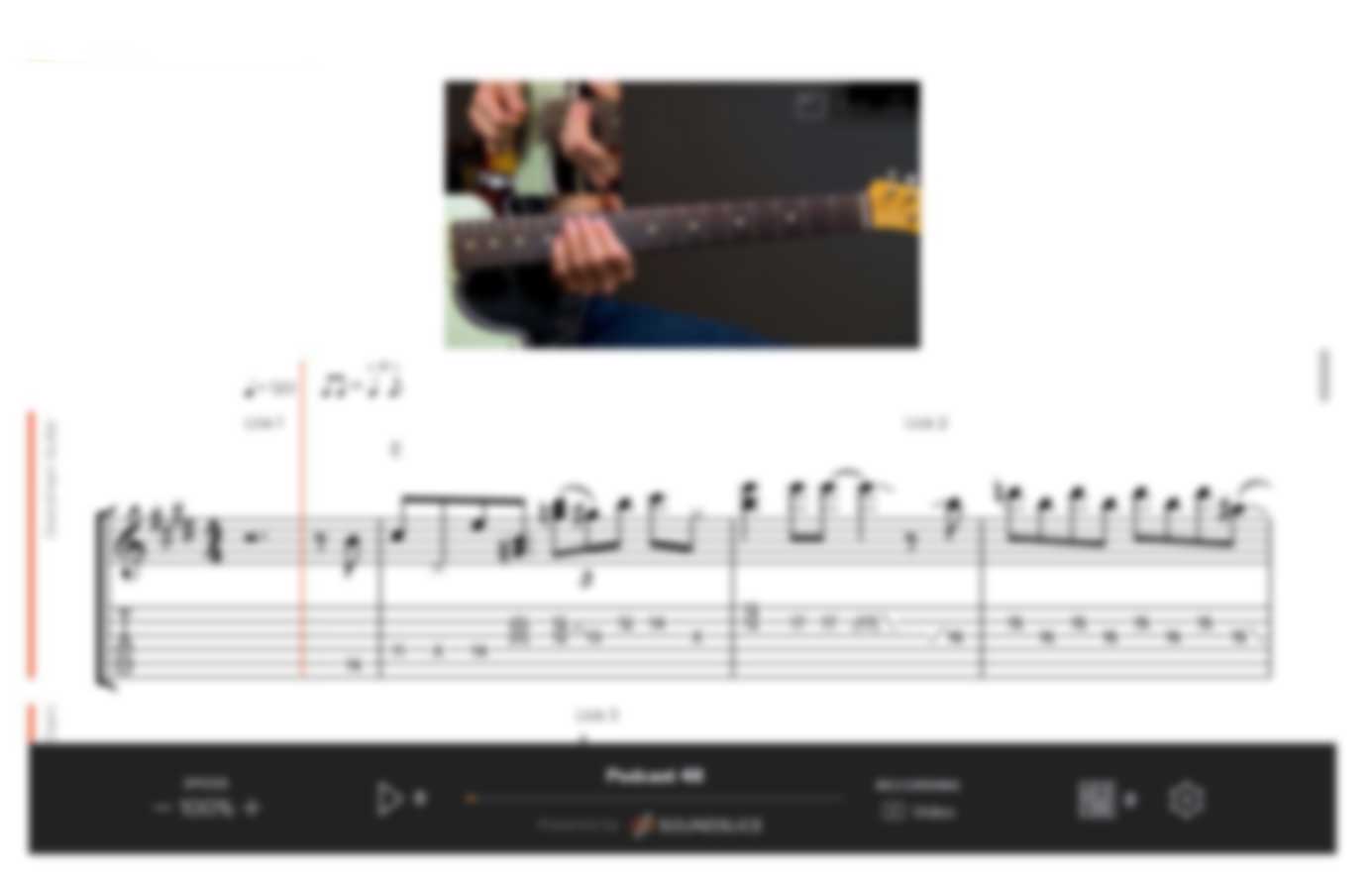
In this lesson, John demonstrates how to improvise a slow blues solo in the key of A by switching between major and minor pentatonic scales. He covers specific techniques such as sliding into notes, bending, and using vibrato while emphasizing the importance of the major pentatonic scale over the one chord (A) and the minor pentatonic scale over the four (D) and five chords. This approach is illustrated through a series of licks that are characteristic of blues artists like BB King and Eric Clapton. The lesson is suitable for intermediate players looking to enhance their improvisational skills in a 12-bar blues context.

Read Full Transcript

Hey guys, John here at LearningGuitarNow.com, and in this lesson I'm going to show you how to play a slow blues solo in the key of A. And for this solo I'm going to use a certain concept to teach you how to go about improvising between major and minor. So this is the rule that I'm going by for the solo I played. So for the one chord, which is the A chord, I'm going to use the major pentatonic scale.

And then for the four chord, I'm going to use the minor pentatonic scale. And for the five chord, I'm going to use the minor pentatonic scale. So for the whole solo, I'm just going back and forth between major pentatonic and then minor pentatonic, depending on which chord is happening in the 12 bar blues. So I think it makes a great exercise when you're learning how to blend major and minor, just doing stuff like this to help you better understand how to go about improvising over a 12 bar blues.

We'll go ahead and take a look at the first few licks for free. And if you would like access to the interactive tab, the backing track, as well as the full lesson, check out the All Access Pass. When you do become an All Access Pass subscriber, you'll also gain access to Blues Guitar Method 1 and Method 2, in which I go over how to completely understand the way I like to teach it, blending major and minor over the one, the four and the five chord in a 12 bar blues. What do you do?

Do you play major? Do you play minor? I go over how to think about that whole process. It's just not really one simple answer.

There's a lot of things you can think about and there's a lot of things you can do depending on what you want to sound like. Okay, let's go ahead and start the lesson. Okay, now I'm going to break this solo down for you into eight separate licks. This is in the key of A and lick one sounds like this.

Okay, so that's lick number one. It's a very simple lick here. And once again, we're going to go over the notion that over the one chord, which is the A chord, we're going to use the major pentatonic. For our four chord, we're going to use the minor pentatonic scale.

And for our five chord, we'll use our minor pentatonic scale as well. So this is technically an intro. I'm just insinuating that this is over the one chord. We're just going to let that last note hang.

It's a quick change, 12 bar blues. So we're just going to let seventh fret on the D string here hang for 12 counts, 12 eight slow blues. But this first little intro piece is taken directly from the major pentatonic scale. So you start on the seventh fret here with the A string.

I like to use my pinky for this because you got this cool BB King pattern. Major pentatonic little pattern scale right there. This is our fifth interval. You get that really cool sound.

It's our major six, then our root. And you'll hear Clapton, BB King, all kinds of blues players starting off blues tunes like that. Now I'm going to slide into the major third from the minor third. So technically the minor third note here on the fifth fret of the G string is not in the major pentatonic scale, but really in essence, you can take any note that is in the major pentatonic scale.

We're just taking this little pattern here and slide to it. If you want to play seven, I'm not thinking about any scale other than the major pentatonic. I'm just saying every note that's in the major pentatonic scale, I'm just going to slide a one fret before that note. I have no clue.

I do know, but I'm just saying if I didn't, I'm not thinking consciously about anything other than, hey, here's a note. I'm going to slide into it from one fret below. I'm not thinking theory or anything at all. It always will work.

It depends on what you want to use it with, but that's an easy way to make some of your pentatonic scales sound a little bit more creative. Just slide into that note. Don't think about anything other than, because you can always use the note before. It sounds great.

Just slid it on every single note. If people say, oh, you put the fifth fret in there. It's the minor third. This doesn't count as the major pentatonic.

If we're going to get picky like that, any bend that you do can take it out of the scale as well, as well as microtones in vibrato. We're not going to take it that far. This is the position. You can do any kind of inflection that you want.

This is the rule that I'm using in this lesson. Pretty easy, little pattern, a little takeaway here from sliding before the note. If you want to start off any blues tune, it sounds really cool. It sounds great over the one chord all the time.

That is it for lick one. Lick two sounds like this. Lick two, remember, we're going to the minor pentatonic scale now. I'm utilizing this first position minor pentatonic scale in A.

That thing. I'm just going to bend it right when the D7 chord comes around. It's a quick change, 12 bars. We have one bar of A.

Then we go to D7 for the next bar here. I'm just bending this eighth fret slightly. Now bar your first finger on the fifth fret of the high E and B. So we've got fifth, five, and the high E, B.

Walk right down that pentatonic scale, eight, bend seventh fret up slightly, seventh fret here, five on the G, and seven on the D string. Then we're going to five, seven, then bend that slightly, that fifth fret on the G string. Hit seventh fret twice, second time you hit it. That's when the one chord comes back in.

That's when that comes back in, adds some vibrato to that. So once again, the one chord, we did the major pentatonic beginning, and then the four chord, the D chord, we moved to the minor pentatonic. So pretty basic lick there. Sounds really cool.

You can kind of improvise it as well. You can play anything you want really over that D7. The whole point is you can learn this solo and start expanding on it using your own ideas. Okay, so that is lick two.

All right, lick three sounds like this. All right, lick three, really simple, easy lick. So we're on the one chord, remember? We just ended this.

We're going to let that seven ring out here, our root note on our D string. And right around the 12th count, we're going to hit nine, seven. This is another little position of our major pentatonic scale. If you notice this thing right here, I'm not doing that in the lick, but it's the same notes as this.

A lot of times in blues, just knowing something that is in a different position or just a slightly different way of playing it. Same pattern, just different way of playing it can open up different improvising ideas like this one. Gives you a little different position changes. It kind of sounds a little bit different.

So we hit nine, seven, nine on the A. It's our major sixth note and then seven here, our root note on the D string or A note. And then I bend this ninth fret right here, ninth fret right here on the D string. And now I'm going to bend it slightly again, but now I'm going to put my first finger on so I can rate the low E and the low E and the A string.

So it just helps me to get more muting involved. If I'm going to bend and rake to that ninth fret of the D string, now hit it without bending it. Seven, nine, and then vibrato to that. Really simple lick.

We're back on the ones. Remember our rule is we got to get a major pentatonic scale. Here's another major pentatonic scale pattern. So pretty sweet lick there.

You'll hear Warren Haynes just wear that kind of pattern out a lot. I got a lot of stuff using that little pattern from just listening to him play a lot. Okay, so that is it for lick three. Okay, well that does it for this lesson.

Like I mentioned previously, if you would like access to the full lesson, the interactive tab, the backing track, and all the other courses at LearningGuitarNow.com, check out the All Access Pass. All right, see you next time. Thanks for watching.

7 comments

  • So I’ve taken a lot of these licks and licks from your other blues courses and tried them over a minor blues progression (i.e., Am7|Dm7|Em7) – and it sounds ok, but not quite right. Do you have a course that explains the differences between the two chord progressions (Minor/Major blues chord progressions) and the licks to play over them? I know your Blues Guitar Method 2 discusses the Major blues chord progression, but is there a course for the Minor blues chord progression?

  • Dumb question. At around 12:00, during the IV chord, you bend a half step into the major pentatonic (high E string, fret 8 to 9). Are you actually consciously thinking about the chord that is coming and are thinking that far ahead? “I’m in the IV, but I want the major over the I, so start now and time it for when the chord changes back to the I”? Something like that thought process, or is it more intuitive and “it comes with a lot of practice” sort of thing? At this stage of your playing, do the thoughts still come into your head or are you just playing it?

    • A

      Hi @mikec3211,

      I am thinking about that but after so many years of doing it, it doesn’t feel like something that takes a lot of effort. I just can intuitively think that sound and understand in my head what interval it is. That’s why I teach to sing your Intervals in Blues Guitar Method 1 as you need to get them ingrained into your head of what they sound like. Hope that helps!

  • Great tone in this song. Please tell us your signal chain.

Leave your comment

Breaking Out of the Box

Learn how to open up the entire fretboard in this FREE Blues Course

Join for Free

All Access Pass

Structured Step by Step Training, Advice, and the Support you need to improve your blues playing.

Join Now