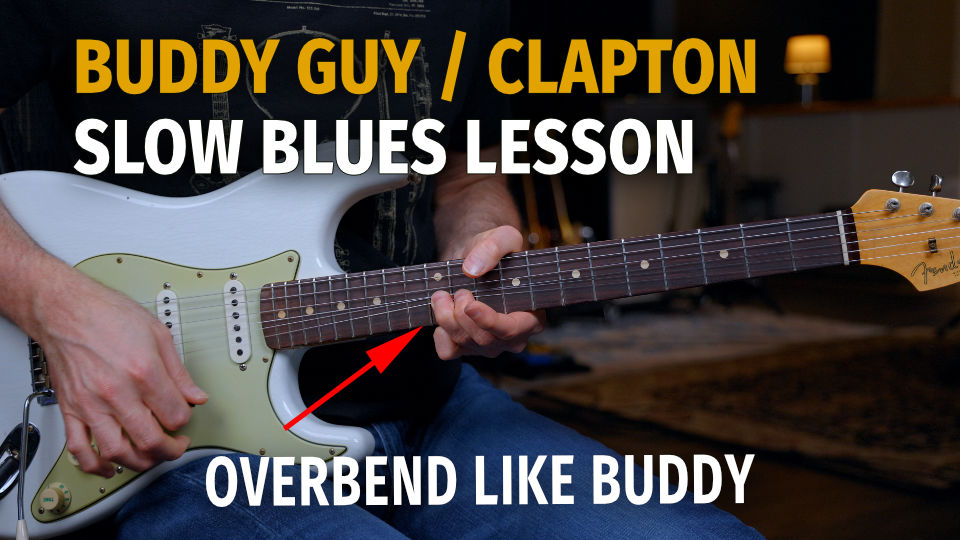
In this lesson you’ll learn how to improve your touch and feel when playing blues guitar by using a variety of techniques that are used to play this blues solo. This lesson is in the key of E.
How to Improve Your Touch and Feel – Podcast 135
March 30, 2026 in Video Podcast / Beginner, Intermediate / Slow Blues
Full Lesson, Interactive Tab, Guitar Pro, and Backing Track
Gain Instant access when you become an All Access Pass Subscriber. Learn more about All Access
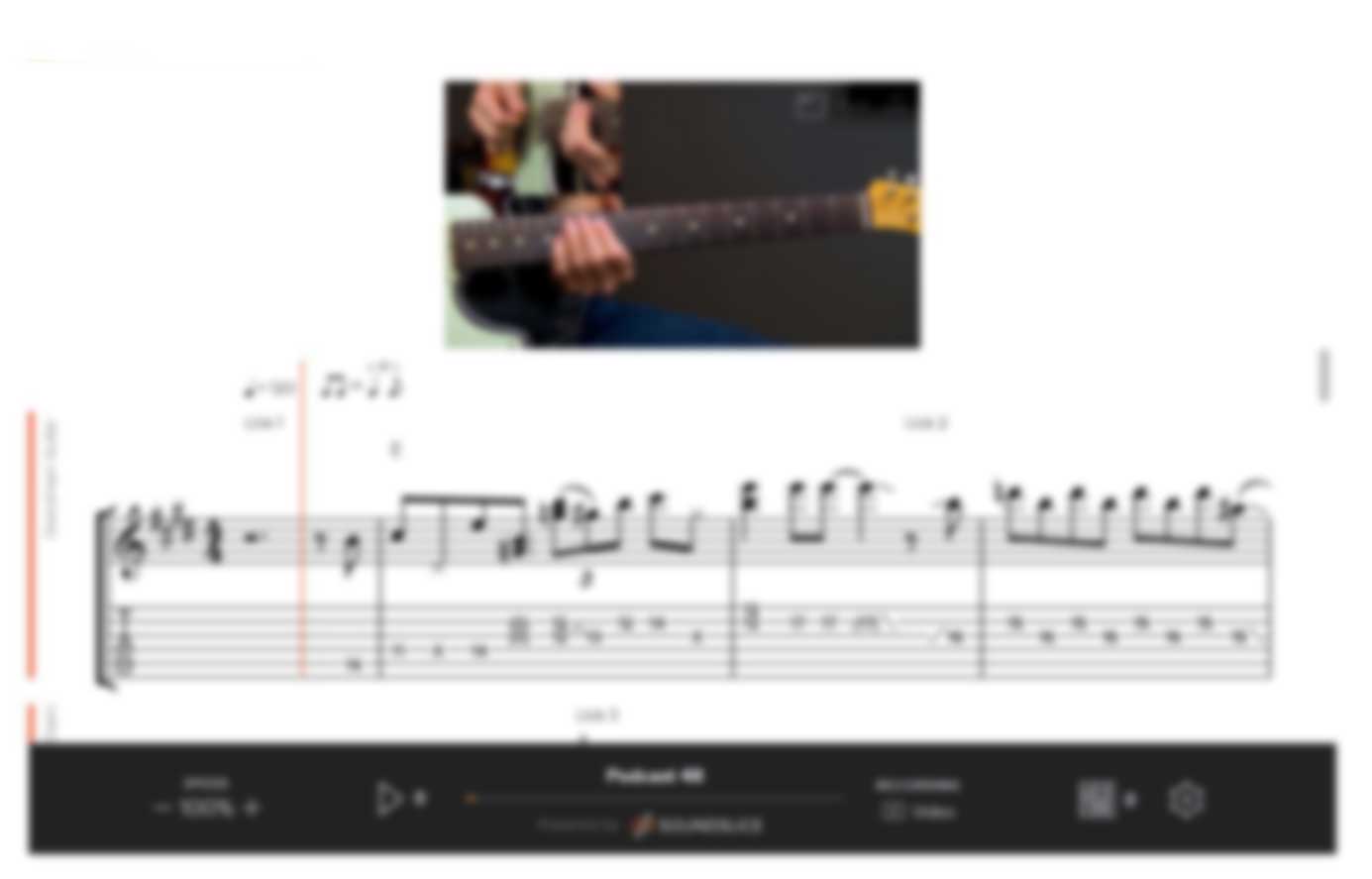
In this lesson, John teaches how to improve touch and feel in blues lead guitar playing, focusing on techniques such as grace slides, vibrato, and the use of open strings. The lesson is centered around a 12-bar blues progression in the key of E, incorporating chords E, A7, and B7. Specific licks are broken down, highlighting the use of the fourth and third position minor pentatonic scales, and drawing inspiration from artists like BB King and Stevie Ray Vaughan. This lesson is suitable for intermediate players looking to enhance their expressive playing style.
Read Full Transcript
WEBVTT Hey guys, John here from LearningGuitarNow.com, and in this lesson I want to talk about improving your touch and feel when playing blues lead guitar. Now, there's a lot of things that you can do to improve that and a lot of ways to go about doing it, so I'm just going to give you some ideas about how to do this. For the example solo, this is played in the key of E. It's in 4-4 time.
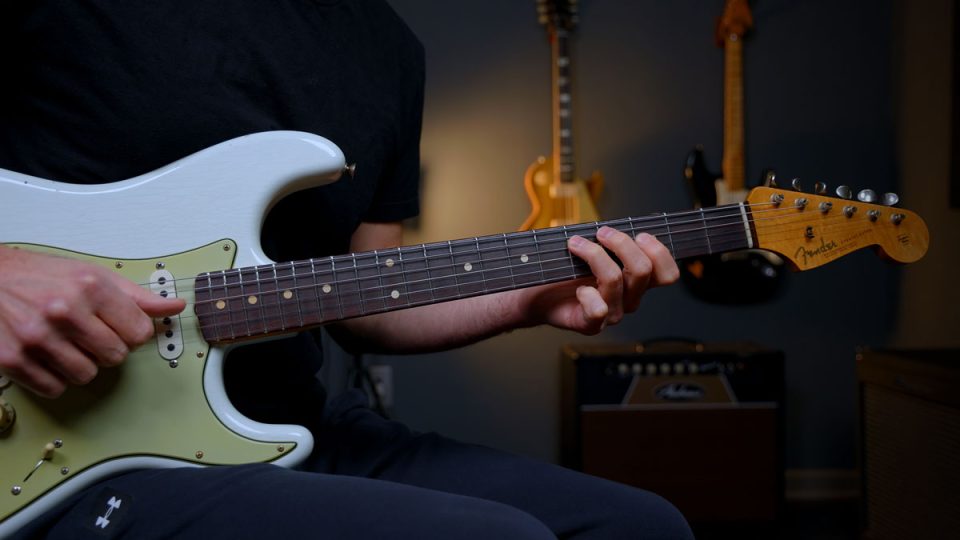
It's just E chord, A7, and B7, a 12-bar blues played with an acoustic guitar, and it gives a kind of a nice laid-back feel, I think, which gives you a lot of room to just practice these little inflections and nuances that you have to get really good at if you want to sound great when playing any kind of blues guitar. To get the tone for this lesson, I'm using this Gibson. It's a Block 335 Figured, and I'm using a Victoria 45410. It's like a 59 Tweed Bassman clone, and I'm not using any pedals.
Just turn the amp up a little bit and turn the volume down on the guitar to get more of a clean tone. We'll go ahead and take a look at a portion of the lesson for free, and if you would like the full version, the interactive tab and the backing track, check out the All Access Pass. Also, check out my free blues mini course. It's a 45-minute blues course to help you start understanding a few different ways that you can look at the fretboard to start breaking out of that first position pentatonic box.
It comes complete with sound slice, interactive tabs, and backing tracks completely for free. Click the link in the description, and you can go ahead and grab that course. All right, let's go ahead and start this lesson. Okay, now let's break down the solo.
I divided it into nine separate licks. Once again, we're in the key of E. So the group we're playing over is just using the E chord, this strum pattern, the A7, and then the B7 chord, this one. Kind of a laid-back groove, and it's just a standard 12-bar blues with a quick change of the getting going to the E to the A.
So let's go ahead and start off with lick number one. Sounds like this. Okay, lick number one. Let's talk about this.
So what's happening, we're coming in on the third count, and we're just sliding seven to nine. So a grace slide. Grace slide helps you improve the feel of everything that you're playing. If you want to play a note, just add a grace slide before of it.
The note does not count as any rhythmic value. So seven to nine is one beat. Seven does not count as anything. It's just a grace slide.
And so those played all over the fretboard anywhere, and whatever key you're playing just adds a little bit of something to it. It may sound simple, but a lot of times we forget, you know, to do these little simple things, and it's what all those simple little nuances that are going to make your blues playing just sound good. After that, we're adding some nice, relaxed vibrato. I'm going down first.
All three fingers. You could use your second finger. Use a different vibrato. Clapton style.
First finger. Third. So just that one single note can be practiced and make it sound, you know, the way that you want to make it sound. There's numerous ways just to play one note like that.
And so we're going to start this area of the solo in this area, the fourth position minor pentatonic key of E. I love using the fourth position minor pentatonic. Sounds really cool, especially on these lower strings like this key of E. Now we're just going to play this phrase seven nine seven and walk down our blues scale right inside of that fourth position minor pentatonic.
Nine eight seven and eight and then slide. Now that time we're not doing a grace slide, just sliding. See a different than grace slide. Now we have a rhythmic value to the slide.
Different tone, different way, different sound. Now we're going back into this third position minor pentatonic scale. You all got seven nine seven nine seven nine on the E. A.
D. Great way to move between the third and fourth position minor pentatonic skills. Adding some nice vibrato here. So the second part, we're just doing this slowly.
Seven. Nine seven nine eight seven slide to five. That is a transition and little slide to take us back from fourth position to the third position minor pentatonic key of E. Then seven five seven seven five.
Nice vibrato on our low A string. Those can be a little bit more challenging to do. Also, the thing to think about, I'm using my Fender medium pick with the round side. Now, sometimes if you use the round side, it gives a more laid back, relaxed groove to the notes.
Also, I'm using these little inflections here and I'm also striking certain notes harder than others, just adding an accent to it. So right there. Right there. So also experiment with where you accent.
You know, it's up to you just wherever you feel like doing. Those also improve your touch and the feel. All these little bitty things that you might not be thinking about just makes your playing sound way better than instead of just going. Just sounds like I'm going through the motions or.
Also, I'm using the round side like I mentioned. And when using the round side, I'm not striking the notes crazy hard. See what I mean? I'm not killing the dynamics in the tone.
You hit the strings so hard, you can ruin the tone, especially when you're playing laid back like this. I'm barely like really striking it. I'm more using my knuckles to strike. And if you angle the slide more, you get more of the round sound.
You can play it like that as well. So really cool part right there. All those little inflections make a huge difference. The second part of the lick.
Well, we're just going to play this. So I'm staying in the fourth position minor pentatonic, then I'm going to take the 10th fret on the B string. I'm going to do a small rake. That also improves the touch and the feel.
But I'm not like killing the strain. It's not like Stevie Ray Vaughan, you know, it's just a small little rake. Just a little bit of an accent. Nice, steady vibrato.
So I'm just bending up 10th fret, pull it down, release 10 to 8, 9, 10. Nice vibrato on our ninth fret here. That's our E note. OK, that's it for Lick 1.
All right, Lick 2 sounds like this. OK, Lick 2 has got a few more challenging things in it. So we're moving to the A chord and we're going to play BB King position here. But I'm going to strike it a lot harder this time.
Add some really powerful vibrato, 6, 5, 5. And I'm going to end that phrase by bending my seventh fret on the B string just slightly, almost to this note, which that note is our flat seventh note of our A7 chord here. So that's why that works so well. BB King position, bend this note here in it, almost that flat seventh note.
Sounds great playing blues, stuff like this. So anyway, I'm doing this heavy vibrato. Cutting it off, adding some rest. Another thing to improve the touch and feel of your phrases is playing nothing at all.
You know, if you're always just filling up space, it gives no room for your solo to breathe. So we got this rest. It's almost like a call and response thing. Then we're doing this next.
Now rake, bend up that seventh fret of the high E. Now walk down our blues scale, 7, 6, 5. Now pre-bend it a half or a half step or one fret. And you kind of want to catch the fifth fret behind it.
You'll always have to do that. In this example, I am doing this. Release to a third fret of our E string. Now we're going to play this.
Now release to third fret. Now we're going to slide, great slide to second fret of the A string and then pull off to the open G string. So you have to like do that forcefully. If you want that to sound out, that open slide backwards and kind of almost pulled down to get more volume from that open strings.
A lot of people will do this and you can't ever hear the open string. You want to hear it definitively, but I'm not striking it. Pulling down. That's it.
A lot of people will do this. You want to make, see if you can get that to sound great. Just a cool little move to do. So that whole lick.
Really cool things that you can practice executing. You can use over really any of this stuff. You can use it, play over slow blues, shuffle blues, whatever, you know, it all sounds great. It's just a little bit different timing, but you just want to take these licks over the backing track of anything and experiment with them, change them around, make them your own.
Okay. That's it for like two. All right. Like three sounds like this.
Okay. Look three, a super cool thing to do with utilizing open strings in the key of E. So like this buddy guy type thing, except are you here, Steven Ray doing it all the time as well. I'm just using my thumb and my first finger to hold the pick.
And then I'm using my second finger to pop that open E. So I'm striking two D string. Now open G and open E. I'll put my second finger on the second fret.
Now I'm going to strike that note. Three, two, open. So that's all one phrase. So I'll play this like that and make sure that second finger comes into your hand.
Not like, like that, because it's going to hit the B. So you got it. So we have this. Now put your second finger down again.
Do it again. Now open G, open E, open D. So slowly. And then our next little phrase are playing with the B7 chord.
So we're playing this on the G string utilizing the blues scale, three, two, four slide. So I know that fourth fret here on the G is my B note and I'm playing over the B7 chord. So I'm just ending on that note, adding vibrato. Sounds like you're playing to the chord.
Very easy to do. Theoretically, what I'm thinking about is I could play any notes from the B fourth position minor pentatonic scale if I'm thinking about key of B. You could also add the blues scale. Just sounds really cool to use fourth position minor pentatonic scale when you're playing over the five chord, but you play fourth position minor pentatonic scale of the five chords.
So B fourth position minor pentatonic. Also added the blues note from the E minor pentatonic scale, adding what would be E minor blues scale, but you can switch back and forth between those two because the parent key will always work. Anyway, I'm switching back and forth between E blues scale and then B, that minor pentatonic fourth position. Super cool thing that you can play right there.
All right, well that does it for this free lesson. Like I mentioned previously, if you want access to the full lesson, the interactive tab, backing track, guitar profile, PDF, check out the all access paths. You'll also gain access to everything on the site, which is over 300 hours of blues lessons with courses about learning how to play blues, rhythm guitar, lead guitar, open E tuning and open G tuning as well as standard tuning slide guitar. All right, thanks for watching and I'll see you next time.
Breaking Out of the Box
Learn how to open up the entire fretboard in this FREE Blues Course
 Join for Free
All Access Pass
Step by Step Lessons, Advice, and the Support you need to improve your blues playing.
 Join Now