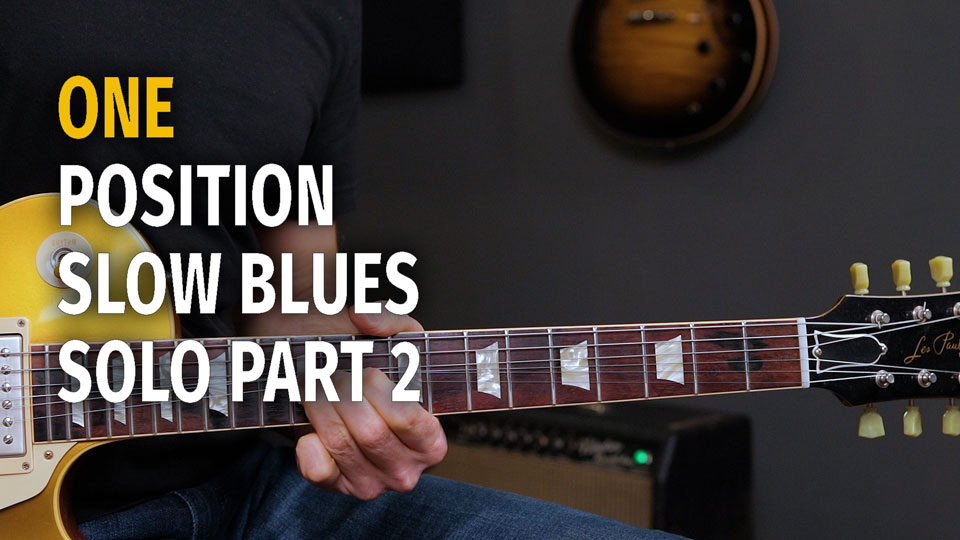
In this lesson I want to show you how to play a 36 bar Cream inspired blues solo. This is similar to Strange Brew, one of my favorite Cream tunes and has some great classic blues nuances to learn.
Cream Inspired 12 Bar Blues Solo – Podcast 85
July 15, 2021 / Category: Video Podcast
Intermediate / Rock Blues / Key of A
Full Lesson, Interactive Tab, Guitar Pro, and Backing Track
Gain Instant access when you become an All Access Pass Subscriber. Learn more about All Access
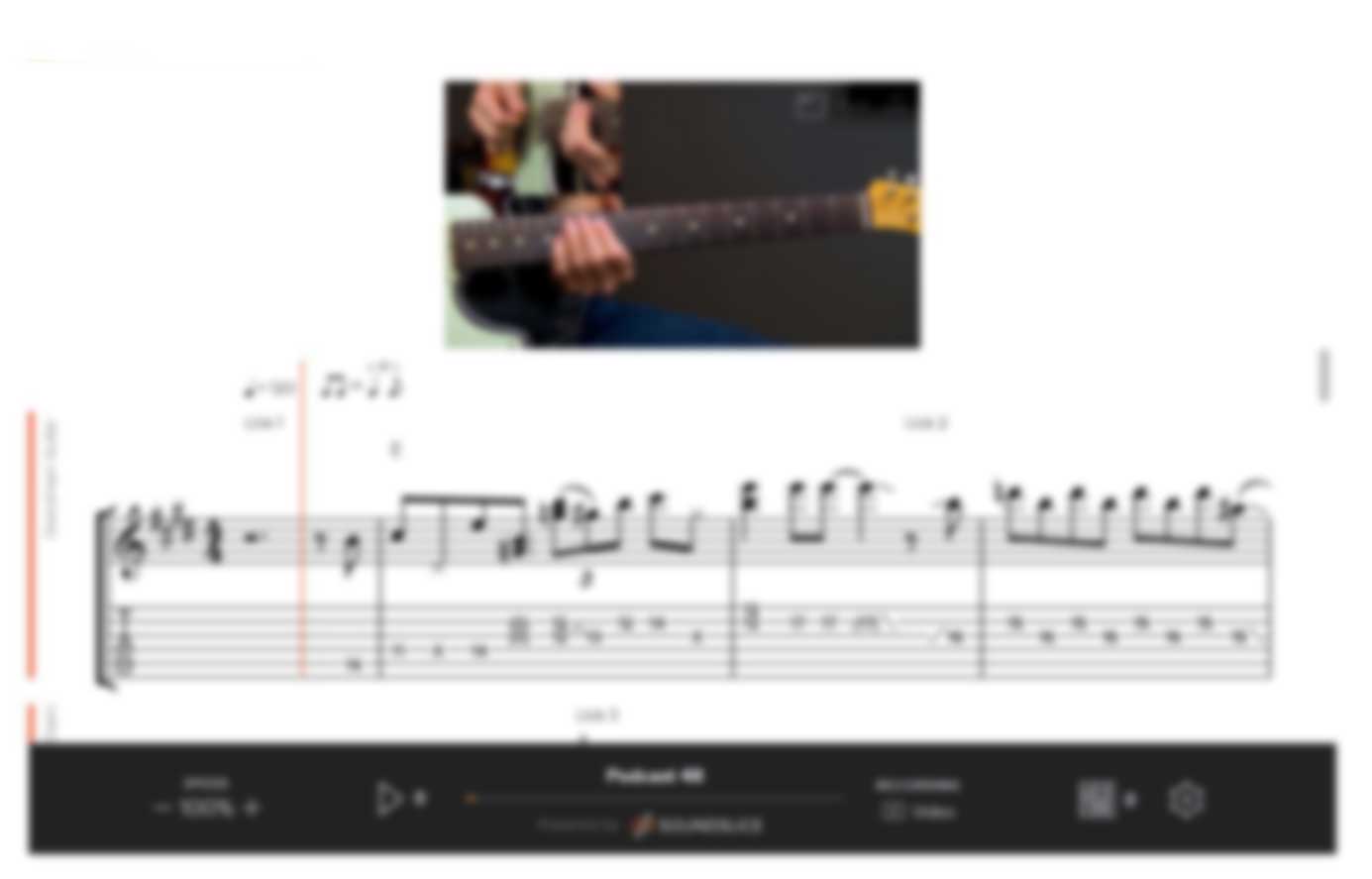
In this lesson, John demonstrates how to play a Cream-inspired 12-bar blues solo in the key of A, drawing influence from Eric Clapton's style, particularly his work on "Strange Brew." The lesson covers essential techniques such as slow bends, heavy vibrato, and classic blues phrases, utilizing the minor pentatonic scale. Students will learn to incorporate Albert King-style licks and various vibrato styles to capture the essence of Clapton's sound. This lesson is suitable for intermediate players looking to enhance their blues guitar skills.
Read Full Transcript
Hey guys, John here from LearningGuitarNow.com. In this lesson, I want to show you how to play a cream-inspired 12 bar blues solo in the key of A. This is similar to something you would hear clapped in play over Strange Brew and has some great classic blues riffs to learn. To get the time for the lesson, I'm plugged straight into my Shure SL-68 with no effects.
On the mix down, I did add some plate and some room reverb, just to give it a little bit more ambience. We'll go ahead and take a look at the first couple of licks for free, and if you'd like to gain access to the full lesson, your interactive tab, and the backing track, check out the All Access Pass. All right, let's go ahead and start this lesson. Okay, now I want to break this solo down for you into eight separate licks.
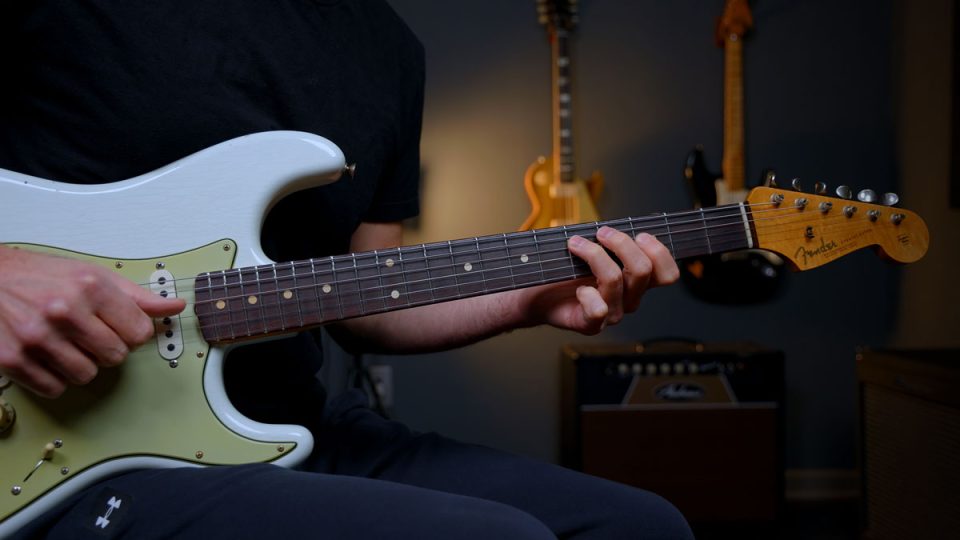
We're in the key of A, and this is a 12 bar blues. Before we go ahead and get started, I'm using the Bridge Pickup on this Heritage H535. I got the volume around 9, 8 or 9 or so is what I found. I got the best tone on 10.
It was a little too bright, a little too much gain, and I put the tone knob around five and a half, six, somewhere in that area. It seems like it sounds more organic to me instead of having so much bite. Sometimes the treble can make it sound a little bit more, too much rock. I wanted to give it that kind of vintage blues sound.
So we're going to start out with lick one, and that sounds like this. Okay, so for lick one, we are starting right on the first beat of this 12 bar blues, counting this in four, four, one, two, three, four, kind of like that. It's kind of similar to Strange Brew, the cream tune. And so what we're doing is starting off in the first position minor pentatonic scale, and I'm going to take my second finger, because I noticed Clapton liked to do these bends on the G string like this, and bend up that seventh fret on the G string right here, and add some heavy vibrato to it.
That's one of Clapton's classic things that he did in cream. I thought it's just bend that G string, but use your second finger, and then add the kind of a wider vibrato. And to me, it sounds more like it if you use your second finger. You can always use your third finger as well.
But some of the videos and things that I've seen is he likes to bend on that G string and use his second finger and add the vibrato. It just has a little bit different vibrato, so I'm going to use your second finger to me. Let that hang and sustain for four counts. We're coming to the D chord next on the next bar, and I'm just going to strike it while it's still bent.
Pull it down and just do this simple phrase. Now we're going to take that fifth fret and bend it slightly, one of those classic kind of cream Clapton era moves. Lots of blues players are going to use that anyway, but Clapton had a certain sound that he got when he bent that minor third to almost the major third. It's not quite to it.
And a lot of times he would vibrato that seventh fret with your second finger. It's hard for me to jump like that. You wouldn't want to experiment like that. It's harder for me to play it like that.
I've noticed that he likes to vibrato that D string with the second finger. Now, like I said, it's a little bit tough for me to do it. You want to try it out though. The next step is we're just going to play this classic blues phrase.
Hammering on five to six on the G. Bar your first finger on the fifth fret. Slide eight to ten on the B. Then do that Clapton vibrato on the root note, that tenth fret here.
That's just a classic blues move right there. So lick one, not that difficult of a thing to do. The hardest part is getting vibrato. And just getting the add attitude and the phrasing right.
For more about the vibrato Clapton style, check out my play like Clapton part one. Also, blues techniques deals with various vibrato styles. Okay, so that is it for lick one. Okay, lick two sounds like this.
Okay, so for lick two, what is happening, we're moving up to the second position, minor pentatonic scale. And he's doing like these Albert King style licks, is what I'll refer to them as. I'm just going to let it hang. There's a lot of space on that note right there.
So we're starting the tenth fret, the B string, it's our root note A, right before the next bar comes around to our D chord again. Hitting quick, eight ten. You can even pop that with your finger if you want more of an Albert King style. Then add some more vibrato and let it sustain for the rest of the bar.
Now on the next bar is one of these classic blues phrases I've taught in a previous lesson. It's kind of similar to the ZZ Top thing I did, you know, that going down. I believe that Albert King did a tune like that, going down. Lots of people remade it.
I'm not sure who originally wrote it, but that phrase you're here in all kind of blues songs, especially that going down Albert King. So I just hammered on eight to ten, added vibrato, also added a rake to this. I don't think Clapton used a rake on the stuff he did back then, but I think it sounds cool and adds a kind of a cool nuance to it. Eight, slide backwards to seventh fret here, G string.
And then the last part, you got this. You're here, Clapton doing that stuff a lot as well. Hitting the minor third and then hammer on that's five seven on the G string here, first position minor pentatonic scale. And then pull off, hammer, and you release to five and then you bend it.
And then you can also bend it slightly before you hammer to that seventh. So you have, so you get, has a really cool like cream sound that I hear him doing a lot in that time period. It's just to have a lot of cool like attitude in that thing. And the next piece of this lick is we're just going to slide into the ninth fret of the G string and do that little phrase.
You hear him using that. That's a cool little thing to do. It's like a F chord. It's like a G chord.
It's like a C chord. It's like a D chord. It's like a F chord. It's like a D chord.
And then we're going to slide into the ninth fret of the G string and do that little phrase. You hear him using that. That's a cool little thing to do. It's like a F chord type thing.
Of course we're playing it up here, so it's kind of like a C chord. But you're just sliding into the ninth fret of the G string, bar your third, fifth in the root from a C major chord. And then ending on tenth fret, B string, adding clapton vibrato. Next step, we're going to go to the five chord, the E chord that sustained for four beats, only goes to D.
And we're going to go back down that same phrase again. Just right down that thing. And the last little piece, you're going to rake and do that same thing and hammer on just one strike. And then gradually bend up that fifth fret there, but not exactly to the major third.
You'll hear a cream or a clapton doing that kind of stuff a lot, I think. Anyway, it's a really cool, expressive sound. That is it for Look 2. Okay, well that does it for this free lesson.
As I mentioned previously, if you would like to gain access to the full lesson, check out the All Access Pass. When you do become an All Access Pass subscriber, you'll also gain access to all the courses and lessons on the site that will teach you the concepts and techniques required to play improvisational blues and sly guitar. Thanks for watching. I'll see you next time.
Breaking Out of the Box
Learn how to open up the entire fretboard in this FREE Blues Course
 Join for Free
All Access Pass
Structured Step by Step Training, Advice, and the Support you need to improve your blues playing.
 Join Now