In this lesson I want to show you one of the very first things you should be practicing to start getting better at improvising over a slow blues. To learn more about improvising check out the full courses in the All Access Pass.
First Step When Improvising
May 7, 2022 / Category: Free Blues Guitar Lessons
Level: Beginner / Style: Slow Blues / Key of A
Full Lesson, Interactive Tab, Guitar Pro, and Backing Track
Gain Instant access when you become an All Access Pass Subscriber. Learn more about All Access
Read Full Transcript
Hey guys, John here with LearningGuitarNow.com, and in this lesson, I want to show you one of the very first things that you need to be doing when you start learning how to improvise. Now we're just going to take the simple minor pentatonic scale that most everyone knows and just deal with a couple of different positions. So let's go ahead and break into it. So when you start improvising, everyone always wonders, you know, what notes do I need to end on when I'm playing over a 12-bar blues and we have three chords we're dealing with, a one, a four, and a five.
Those chords just say we're going to do this exercise and the key of A are going to be your A, D, and your E chords. For more about where that comes from and everything, check out my beginner slow blues lead course. So we're dealing with the A, the D, and the E chord, the one, the four, and the five. So when those chords are happening, what notes do you end on within the pentatonic scale?
And learning how to do this makes it sound like you are playing to the chord, so to speak. That's one of the most important things in my mind that you need to be able to start learning how to do is playing to the chord that you're playing over. Once you start doing this, other styles of music use the same concept, so it will really help you to sound more melodic, so it just sounds like you know what you're doing when the chord changes. So this is a first step in starting that journey.
We have our first position minor pentatonic scale, looks like this. So pretty basic. We could also take our second position minor pentatonic scale, any of the positions of the minor pentatonic scale you need to do this exercise with. So the main thing you want to first start doing is you have to memorize where your one, your four, and your five notes are at within that first, all pentatonic positions, really.
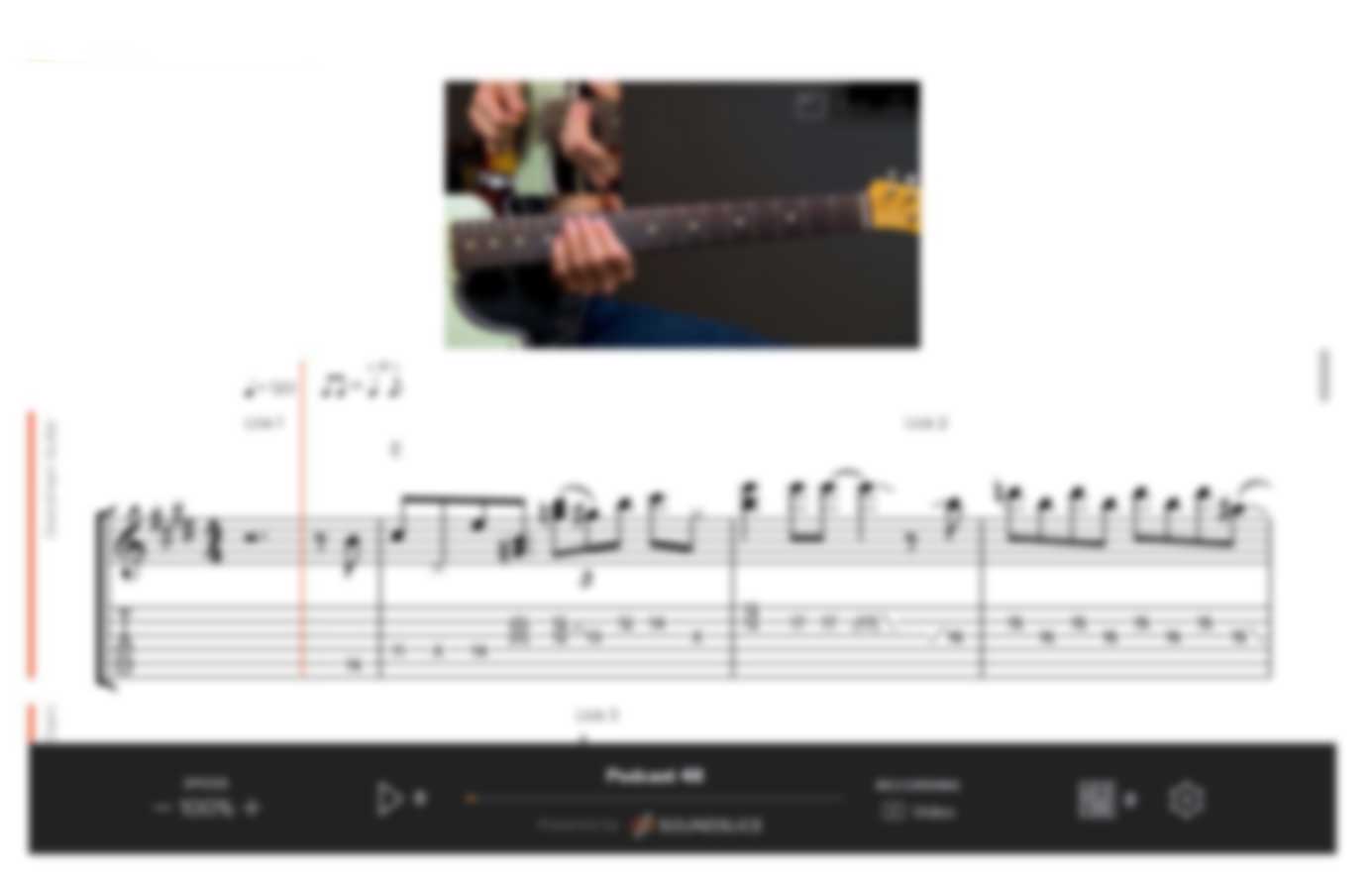
We're just going to take the first position minor pentatonic scale right now, and find where are those A notes? Where is the D note? Where is the E note? And so in this little pattern, we have an A note here, fifth fret on the low E, we have an A note on the seventh fret, D string, we have an A note on our fifth fret, high E string, we have a D here, fifth fret A string, D here, seventh fret G string, we have an E right here, seventh fret on our A string, we have another E on our B string right here, fifth fret, just within that little minor pentatonic pattern.
So I'm going to go ahead and play a backing track and talk over what I would think about just when I'm starting to play this exercise. So I got a 12 bar blues backing track, key of A, I'll go ahead and start it up. So it's hitting the A chord, it's a quick change, going to D. A slid to a D note sounds like playing to the D chord, end it back on an A note because the chord progression is going back to A.
Now we're going again to the D chord, so I need to land on the first beat of a D note, the same kind of a thing right there, D. Ended on my A note here, fifth fret low E, trying to keep it real simple. Now I'm approaching the E, I'm going to bend to the E note, bend to the E note, our D is coming now, slid to that D note, A, E, A, hit E. Slid to the D again, I'm going to hop up to the second position minor pentatonic scale, it's an A note.
Ended on a D note right here. Ended on an A note right here. E note right here. D note.
A. A note. Now we're approaching the E. Back to our A note right here on the B string.
So that's how one thing that you can start doing will make you sound more melodic. When playing over any 12-bar blues like that, you have to know, that is your very first step, you have to know when the chords are changing. You have to memorize that 12-bar blues when the chords are occurring. In this instance we're using a quick change 12-bar blues.
You've got to understand when the chords are happening and then when the chords are changing, hit that note. You don't always want to do that all the time. This is just a great exercise to train you to be able to know where those notes are occurring in the first position or maybe second position minor pentatonic scale. After you have mastered where they're at right in here, you know, add different slides, add different bends, you know, do anything you need to do, hammer on to the A, and add some vibrato, bend to any of the notes, you know, bend into the A, just bend to the A, you can slide to the A, you can slide to the D, bend to the D, and you bend to the E.
Any of those little nuances that you can do to get to the note will make it sound more bluesy. Then after you do that, you know, do this all over the fretboard, finding where those one, four, five notes are at, and then spend some time improvising, hitting those notes right on the beat. After you've learned how to do that, there's numerous other things that you can do to make it sound more melodic, you know, play more notes to the chord, and you can find more information about that if you're interested in taking your improvising to the next level with my beginner blues lead course, blues guitar method one and blues guitar method two. You can gain access to all the improvising lessons that I have in the all access paths.
There's over 200 hours of video to give you lessons on improvising and then solos and links you can learn to start implementing those concepts and techniques into your playing. All right. Hope you found this video helpful. Thanks a lot and I'll see you next time.
Breaking Out of the Box
Learn how to open up the entire fretboard in this FREE Blues Course
Join for FreeAll Access Pass
Structured Step by Step Training, Advice, and the Support you need to improve your blues playing.
Join Now