This lesson will teach you practical techniques for walking between chords, mixing rhythm and lead playing, and staying oriented within the 12-bar blues form. The ultimate goal is developing the ability to seamlessly switch between rhythm and lead while always knowing exactly where you are in the progression. This skill requires quite a bit of practice but is a MUST KNOW for any blues player.
Combine Rhythm and Lead in 12/8 – Podcast 128
July 25, 2025 / Category: Video Podcast
Beginner / Slow Blues / Key of B
Full Lesson, Interactive Tab, Guitar Pro, and Backing Track
Gain Instant access when you become an All Access Pass Subscriber. Learn more about All Access
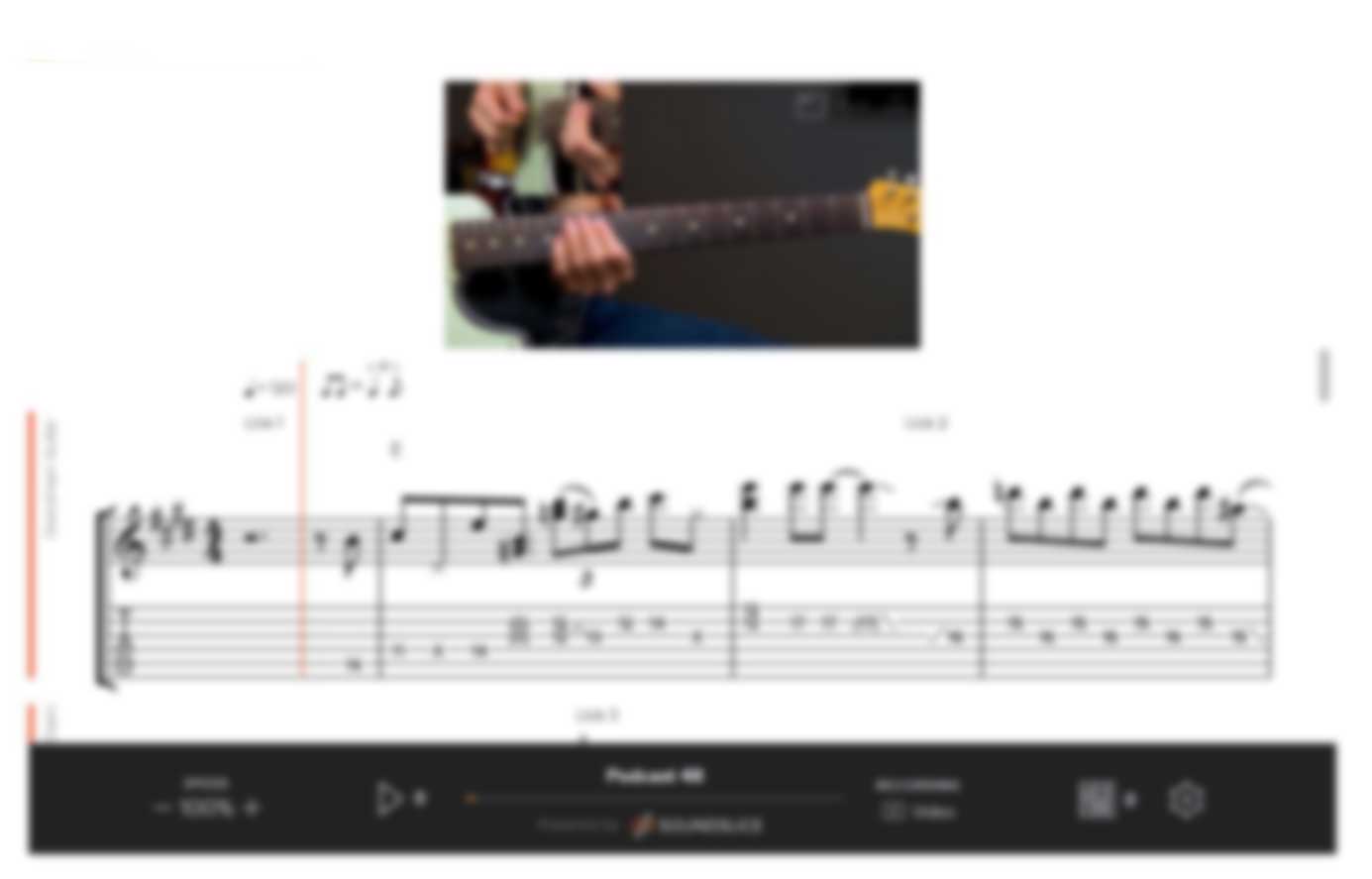
In this lesson, John demonstrates how to combine rhythm and lead guitar techniques while playing a slow blues in the key of B, using a 12/8 time signature. He covers specific techniques such as slow bends, vibrato, and chromatic walk-ups, emphasizing the importance of timing and accenting beats in a drum track. The lesson is designed for intermediate players looking to enhance their ability to switch between rhythm and lead while maintaining groove and timing. By practicing these licks, students will gain a better understanding of chord progressions and how to react musically in a band setting.
Read Full Transcript
Hi guys, John here from LearningGuitarNow.com, and in today's video I want to show you how to start improving your ability to know where you're at when playing over a slow blues. This exercise will help you to switch between rhythm and lead, landing on root notes when the chord occurs, and a variety of other things that will make you sound better in regards to timing. We'll go ahead and take a look at a portion of this lesson for free, and if you want the full lesson Interactive Tab PDF Guitar Pro in the backing track, think about becoming an all access pass subscriber. Also check out my free blues mini course at the link below to get a free 45 minute breaking out of the box course complete with interactive tab and backing tracks.
Click the link below in the description to sign up completely for free. Let's go ahead and start this lesson. Okay, now I'm going to break this exercise solo down for you into seven separate licks. We're playing in the key of B.
This is a 12-8 slow blues, and lick one sounds like this. Okay, so that is lick number one, and once again we're playing the key of B, 12-8 slow blues. And so I chose to play this over just a drum track to show you exactly what you should be listening to when you're playing over a slow blues. So to get the timing right and to sound good over a slow blues, and we like to count it in 12-8, or you could count it in 4-4 time signature, but 12-8 is a lot easier to understand how to count and play over it in regards to your timing.
So for the drum track, the downbeats, the accent beats are the one, the four, the seven, the ten. So that is basically the kick on the one, and then you got the snare on the four, the kick on the seven, and the snare on the ten. You got boom, boom, boom. Now hi-hat is going to be your 1, 2, 3, 4, 5, 6, 7, 8, 9, 10, 11, 12, 1, 2, 3.
So understanding those beats, you can accent those when you're playing rhythm guitar, lead guitar, those counts and rhythms of that drum track is how you can dance around the rhythms when you get used to playing over it. Eventually, you don't really want to think about that all the time, but when you are learning how to play over slow blues, you have got to ingrain that sound into your mind. Those eighth notes, 12-8, we're counting eighth notes, 12 of them, it's pretty easy. 1, 2, 3, 4, 5, 6, 7, 8, 9, 10, 11, 12.
You just got to live and breathe that rhythm. And just listening to that drum track, you can hear it so clearly of where the accent should be and hearing that little hi-hat in the background that's keeping your groove. So with that said, let's go ahead and move on with the lesson. So for the tone, I'm using my 1966 Vibralux and I'm also using a Fender Heavy Tortuga pick with the round side.
For the first part of the lick, I am starting right here in the first position minor pentatonic scale key of B, and I'm bending slightly ninth fret on the G string. That's coming in right on the 10, 11, 12 counts right before the groove comes in. So we're going to bend that just slightly, borrow your first finger on the seventh fret of the high E and the B string, and we're just going to play them right on those beats. I'm also adding a slight rake, if you want to do that, it makes that ninth fret just sound larger.
You see, I'm not striking it like that, I'm striking it pretty easy, but you do that small little rake, it gets a little bit fatter sound to that ninth fret of your G string. Now you get a slide right on the beat when the B chord comes in from 10 to 12. The 10 is a grace note, so you don't count that as a note, you just like 10 to 12 is the rhythm. Let's count it as one beat, it's a grace note here on the 10th fret of the B string.
Add vibrato, we're just going to let that hang for five counts, one, two, three, four, five. Now on the sixth count, we're going to hit the 10th fret of the B string, slide backwards to ninth fret of the G string. This is all minor pentatonic scale, seventh fret, now nine, seven on the D string. I want to go down the blues scale right here, nine, eight, seven.
You can also look at that as a descending phrase moving to your four chord. In this case, our four chord is E, and this is a quick change 12 bar, so you got to memorize what the chord progression is in the quick change. For more about blues chord progressions, check out my blues rhythm guitar course. So anyway, we walk down to nine, eight, that here, nine, eight, and then when we hit the seventh fret on our A string, which is our E note, that's when our E chord is happening, and we're walking up from above and then striking the low E on our ...
We're going to let this ring out for one, two, three, add some vibrato to it, one, two, three, four, five, six, seven. We're going to strike that, just hold a open E chord, and then we're going to go hit this low E, up, down, up. On the tenth count, we're going to slide into this phrase, slide into seven. This is another way you can walk up to a chord that's about to happen, then seven, eight, and then your ninth fret, we're coming back to the B chord.
That's just a cool walk up that you can get to another chord, nine on the A string, and then a chromatic walk up, seven, eight, nine. So we descended, walked down to an E note. Now we walked up, chromatic walk up to the chord, and you can start those chromatic walkups on the tenth count. You can do them anywhere, on over any chord.
That's walking to the one chord, the B, walking up to F sharp, walking up to the E. Just getting very used to playing that and then hearing that, because when you're playing in the band or with drums, bass, whatever, a lot of times you're going to hear the bass player do those walkups, and you can kind of listen for that. If you get lost in the 12-bar blues, what chord is occurring? So a lot of times you can just play, and you can listen to the other instruments, and you react to that.
That's one way of just playing over slow blues and not counting the whole time. It takes a lot of practice, though. You can't just expect to play this a few times and all of a sudden, oh, okay, I know everything. But you'll get up to play with a band or jam with someone, and then you'll get lost.
That's usually what happens. You need to play a thousand times if it takes that many. I've played it hundreds of thousands of times at chord progression at this point. You need to have it in your mind so well that you could be half asleep and still playing the chord progression.
Practicing it in front of a TV without thinking about anything is playing that progression over and over. It can help get it cemented in your mind, because it needs to be second nature. You don't ever need to think about where you are at in the slow blues. That's the most important thing, is always be able to play that chord progression no matter what is going on.
That's it for lick one. Okay, lick two sounds like this. Okay, for lick two, we've just previously ended on this ninth fret of our D string. You let that hang for three counts, and then we're going to just do a mute strum on the fourth count.
So you got one, two, three, four, five. Then this little phrase, when you bar third finger on our ninth fret of our D, G, and B strings, now bar your first finger on the seventh fret of the D, G, and B strings and hammer on to the eighth for the G string to give us a B7 chord, and then strike it one more time. So the whole little phrase, you got one, two, three, four, five, six, and that's a good rhythm thing to get in your mind to be able to help keep the groove happening. One, two, three, four, five, six, seven, eight, nine.
That's how that works. And remember, one, four, seven, and ten are the kick and snare, those are the accent notes. So as you can see, I'm accenting one, two, three, and then accenting that little mute strum here, four, five, six. On the seventh, I'm accenting this.
Striking that again, and then now we're going to do a lick. Now we're going to walk up to E, except this time we're going to do three fret walk up instead of just doing two fret walk up to the note. So we're going to start this on the 10th fret as well, 10, 11, 12, so that's four, five, six. Previously, we did this lick here, that same thing we did previously, add some nice vibrato to this.
On the 10th count, we're going to play this to walk up to the E chord, four, five, six. Now when we strike seven, that's our first count and that's where the E chord happens. Okay, so that's it for lick two. Okay, well that does it for this free lesson.
Like I mentioned previously, if you want the full lesson along with the extras, check out the all access pass. Thanks for watching and I'll see you next time.
Breaking Out of the Box
Learn how to open up the entire fretboard in this FREE Blues Course
 Join for Free
All Access Pass
Structured Step by Step Training, Advice, and the Support you need to improve your blues playing.
 Join Now