In this lesson you will learn how to add Hendrix Style chord embellishments to a major barre chord. This lesson is an excerpt from my Chord Embellishments Course. This lesson is in the key of A.
How to Add Embellishments to Chords – Hendrix Style
November 25, 2025 / Category: Free Blues Guitar Lessons
Level: Beginner / Style: Ballad Blues / Key of A
Full Lesson, Interactive Tab, Guitar Pro, and Backing Track
Gain Instant access when you become an All Access Pass Subscriber. Learn more about All Access
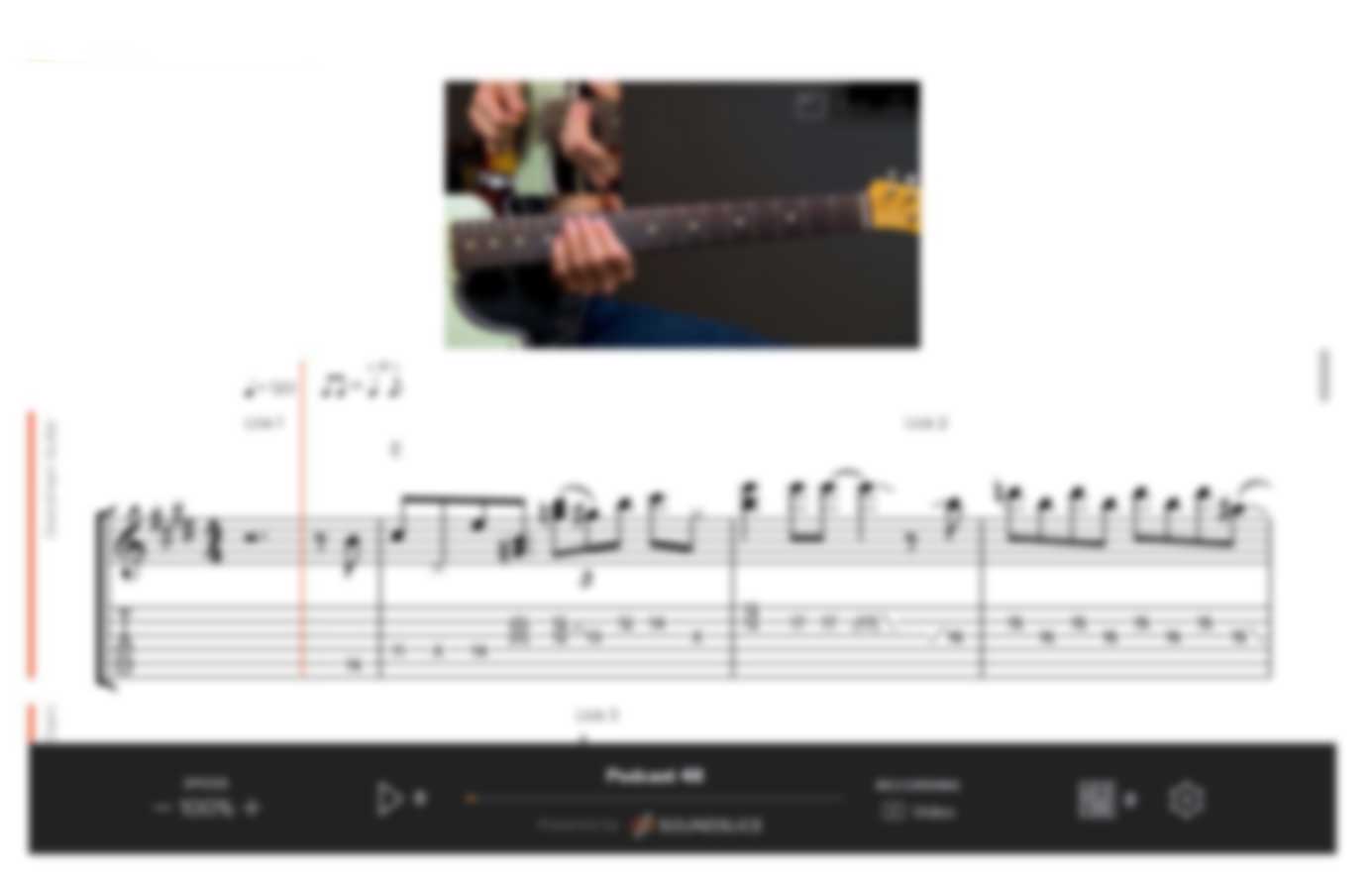
In this lesson, the instructor demonstrates how to add embellishments to chords in the style of Jimi Hendrix, focusing on the A major chord and its variations. Key techniques covered include hammer-ons, chord extensions, and utilizing the major pentatonic scale to create melodic phrases. The lesson emphasizes two different positions for playing the A major chord, allowing for greater movement across the fretboard. This content is suitable for intermediate players looking to enhance their chord playing with stylistic elements used by artists like Hendrix and Stevie Ray Vaughan.
Read Full Transcript
All right, in this lesson, I'm going to show you some different positions that you can use to start using this style all over the fretboard, and you're not just trapped in one area. So the first position that we want to take a look at is based on the E major chord, based on the low E string. So we're just going to take A, for instance. I say E because the bass, the root note, is located on the low E string.
That note is an A note. If you don't know that, you have to count up E, F, F sharp, G, G sharp, A. Remember E has no sharp, go straight to F, F, F sharp, G, G sharp, A. That's our root note on the low E string.
Then I'm going to play A major, like a low E bar chord form. So once you know where you're at, we're utilizing this position based on this chord. So anytime you're using this chord or a variation of that chord, for example, this, which you're often, you know, hear Hendrix, Steve Ray, Mayer, that kind of style playing, or just playing with their thumb. Thumb on the fifth fret, and I got these barred like an F chord here.
For more about thumb chords and chords in general, check out Blue's Guitar Rhythm Method. So this is an A major chord, whether you want to play it like this or this, let's add a little position that you can use when you're playing in this area. So if you're playing this chord, there's a little position that sounds great when doing this. So you can have this kind of thing.
That's just a heavily used phrase by all the greats using this kind of a style. So what I'm doing is just I'm taking my first finger, doing that same rhythm that we learned earlier, hammering on quick, but taking my first string on the fifth fret of the B and E strings, hammering on to the seventh fret of the B string with my third finger, then striking bottom two. Now going up and putting my first finger on the fourth fret of the G string and my second finger on the fifth fret of the B string, they have this position. Hammering on my third finger to the sixth fret.
So we have the intervals here, these are just notes taken from a chord. So we have our fifth interval and our root, hammering on to that major six here. It's all taken from the major pentatonic scale. So this one is taking the second interval here and then using the fifth interval and hammering on to that major third sounds really great over a major chord.
So you have that position with this. So you can also take this chord and then do the same thing here. Just go down an octave and play it on these strings, you have this. Same exact intervals here.
So that's two different things that you can do when you're right here on this chord. So it's just a great thing to know when you're playing this chord, what can I do playing in the key of A. And of course you can use your pinky to add extensions to the chord, but these little like this. But this lesson is talking about how to do the chord embellishing style, you can always add stuff like that.
So if you're using this position, just memorize, you can use that area and then this area which is the same thing, just down an octave. So that's starting to open up the fretboard just a little bit. So you're right here and you can move up to here to do stuff and then you can move down here to do this stuff. Remember, you don't always have to play this rhythm.
That's just one that I'm giving you. You could do hammer-on.
Breaking Out of the Box
Learn how to open up the entire fretboard in this FREE Blues Course
 Join for Free
All Access Pass
Structured Step by Step Training, Advice, and the Support you need to improve your blues playing.
 Join Now