In this lesson you’ll learn an Eric Clapton Someday style solo inspired from his From the Cradle Era. This free lesson excerpt is from my Play Like Clapton From the Cradle era Course. This lesson is in the key of D.
Clapton Someday Style Lesson – Use This Exercise
April 27, 2026 / Advanced / Slow Blues, 8 Bar Blues
Full Lesson, Interactive Tab, Guitar Pro, and Backing Track
Gain Instant access when you become an All Access Pass Subscriber. Learn more about All Access
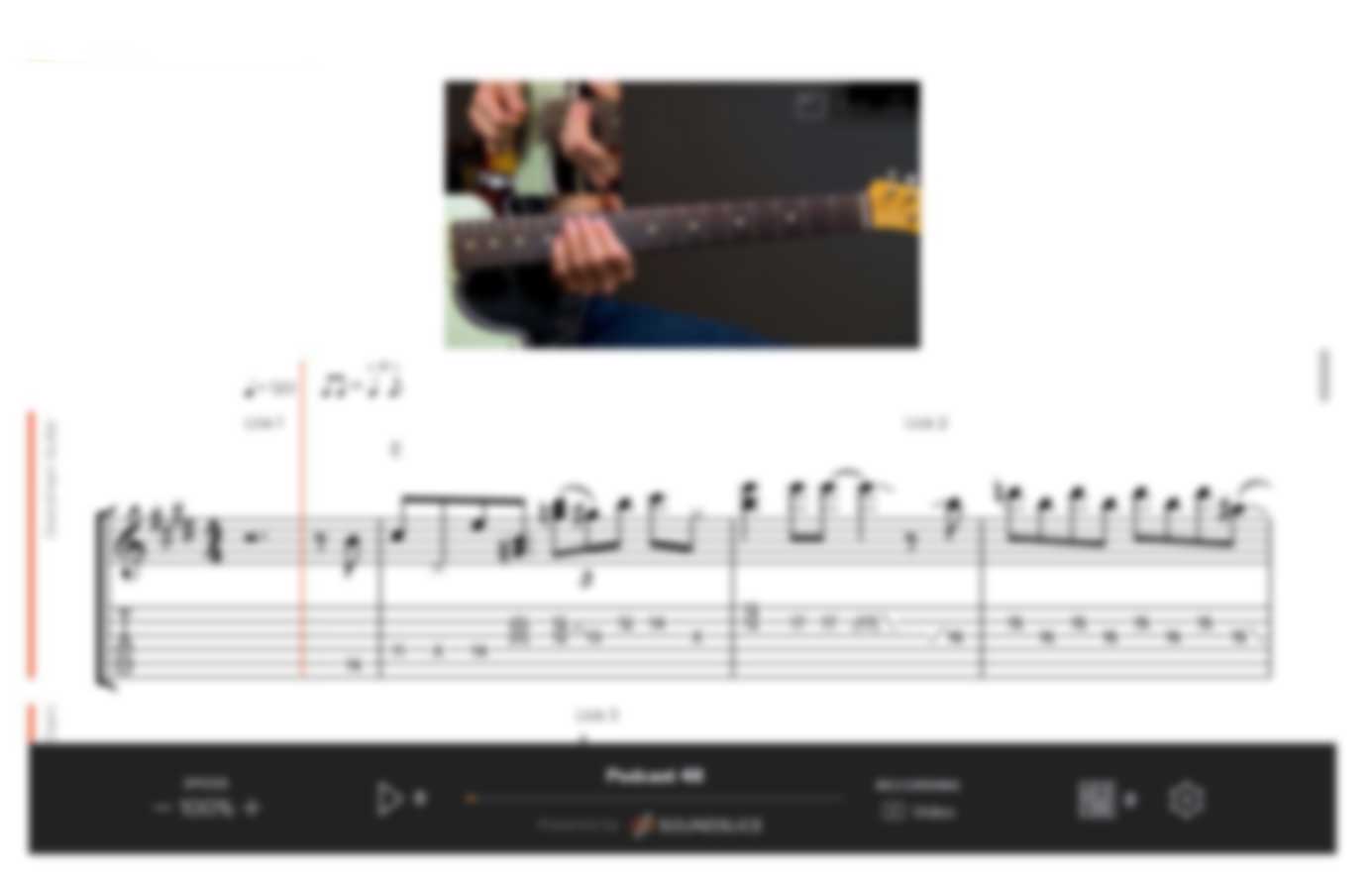
Read Full Transcript
WEBVTT okay, in this lesson, we're going to take a look at a Clapton from the Cradle style. It is a someday after a while inspired solo. This is an eight bar blues in the key of D, and it's got a lot of influence from Freddie King. And I think it's a cool solo to learn a lot of different concepts and techniques that you can take away from it.
To get the tone for this lesson, I'm using the Victoria 45410. It's a tweed basement clone with this Gibson block. It's a 335 figured, and I'm also using the MXR Duke of tone pedal to get a little extra gain with the amp. We'll go ahead and take a look at a portion of us for free.
And if you would like the full version, the interactive tab and the backing track, check out the all access pass. Also check out my free blues mini course. It's a 45 minute blues course to help you start understanding a few different ways that you can look at the fretboard to start breaking out of that first position pentatonic box. It comes complete with sound slice, interactive tabs and backing tracks completely for free.
Click the link in the description and you can go ahead and grab that course. All right, let's go ahead and start this lesson. Okay. Now I'm going to break down the solo into 13 separate licks.
Once again, we're in the key of D and lick one sounds like this. Okay. So for lick one intro, we're coming in, we're starting right before the band starts. So what we're doing is basically coming in on the 10th count.
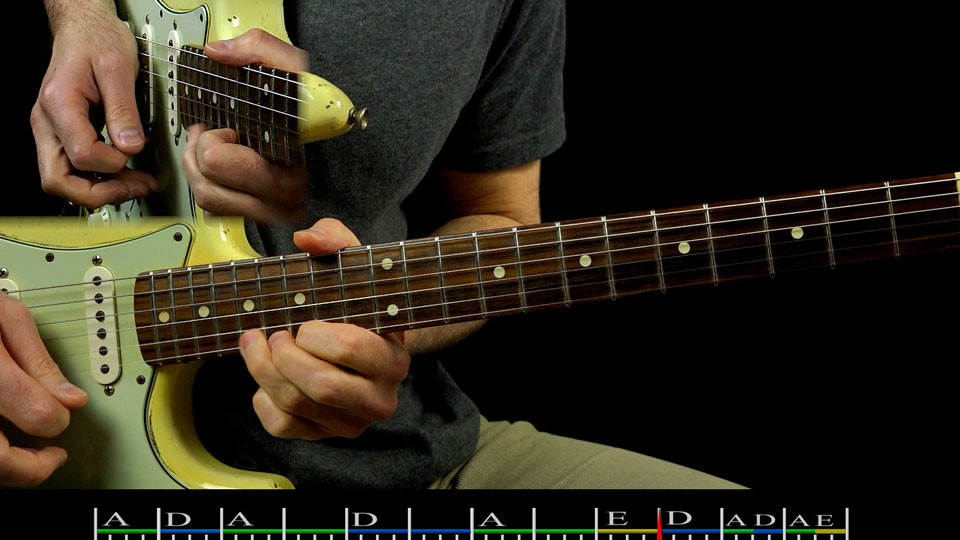
You can count this in 12, eight. That's what I'm doing. One, two, three, four, five, six, seven, eight, nine, 10, 11, 12. On that 10th count, we're going to start here in our minor pentatonic first position, you know, key of D, we have this 13, 10, first position minor pentatonic scale, starting on that 10th for their G string.
And then we're going to play our minor third, which this note is an 11th fret after that, which is our major third. Once again, common minor third, major third on our G string, 10 to 11. So we got 10, 11, 10, 12 on the B. And then we're going to hit our root note, our D, the 10th fret on the high E string.
And then immediately jump to the D note again on the B string, the 15th fret. So you hear clapped in a lot of blues artists doing that thing, just hitting our root note and then jumping up to a root note one string below. It's a really cool way to start slow blues like this. So we had this applying that heavy Clapton style vibrato.
Now we're in our second position minor pentatonic scale, 13, 15 here. Now we're going to kind of rake and bend up slightly that 15th fret of our high E string. And then slightly bend that 13th fret of the high E string. A lot of times in the blues stuff like this, it's just those slightly bent notes that make it just sound a lot more bluesy.
So something like that. We're not bending exactly to the fret above. We're just slightly doing it to get the vibe of it. So don't really worry about trying to make it to get to an exact pitch.
Focus on making it sound like cool. See something like that. So that'd be a great exercise to do just to train your ear to hearing those notes that are not really a note that you can play. It's just kind of in between the frets and always talk about that all the time.
The essence of the blues is really in between the frets and certain intervals such as the minor third, major third, and between your flat five and your fifth interval. So that's one thing you can think about when playing that. Our next step is bending our 13th fret. I did a slight rake again.
Bring it down. Bar your first finger on the 10th fret of the high E and the B. Strike those and then pull off 13 to 10 on our B string right here. 12 to 10 and G.
Now this bend up almost to one fret up with our 12th fret on our G string. Pull down, release to 10. Now roll your third finger on the 12th fret of the D and the G. Hammer on pull off 10, 12, 10.
And then slight bend on that G string. Hear clapping doing that all the time. And heavy vibrato here on our D string, our root note. So that'll make a great exercise, the second part of it.
Really fun one to play, kind of reminiscent of his cream style as well. Great exercise for, you know, doing a lot of different techniques. Rake, bend, bring it down, the boring knees. And then this phrase that you have to know when you're playing with any kind of a blues stuff.
The bend up, pull down, release. The roll with your third finger. Hammer on pull off, slight bend. Slowly.
Just a fun lick to me to play. Okay, so that's it for lick one. Okay, lick two sounds like this. All right, lick two.
Super cool lick, I think. We're playing this over our G chord, which is now occurring. And so what I'm doing is sliding to that 12th fret of our B string. I like to do it on my second finger.
I think Clapton does as well. And so right in that first position minor pentatonic area, if you just play 10, 12, 10, 12, it's basically major pentatonic. So that's what I'm doing. And then we're pre-bending 12 here, 10, 12 on the high E.
Now bend it up to one fret up. Now we're going back to our minor pentatonic first position, that 10, 13. Another Clapton mannerism, he uses a lot, just striking two notes, 10, 13 on the high E and then hammer on pull off immediately. So if you have the next part with this part, 13 on the B and then heavy vibrato here, that'll make a great exercise as well.
I mean, that's also one of the courses I produce about play like Clapton, maybe one or two. It's a great exercise of play because you hear Clapton doing that all the time. And so another thing to take note of about the first part, this note here, we're playing that over G chord. We're sliding into the 12th fret of the B string.
That's the major third of a G chord, play G major bar chord. That's why it sounds good to play it over that chord. And then switching to minor. Now we're going to play this quick pull off 13 to 10 on the B string.
I'm going to rake slightly and then bend 12th fret, pull it down, release to 10th, and then slightly bend that 10th fret. Another Clapton mannerism you hear him doing all the time, especially in cream as well. So two great exercises you could do in this leg. Then super fun to play, I think, and sound great over any type of a blues.
Okay, so that's it for lick two.
Breaking Out of the Box FREE Course
Join for Free