Acoustic Slide Guitar Solo – Podcast 136

May 16, 2026 / Intermediate / Slow Blues 

In this lesson you will learn how to play an acoustic slide guitar solo using Drop D Tuning. This tuning is exactly the same as standard tuning except for tuning your low E string to D. This means you can use all of the concepts for Standard Tuning Slide Method 1 except for the low E string.

Full Lesson, Interactive Tab, Guitar Pro, and Backing Track

Gain Instant access when you become an All Access Pass Subscriber. Learn more about All Access
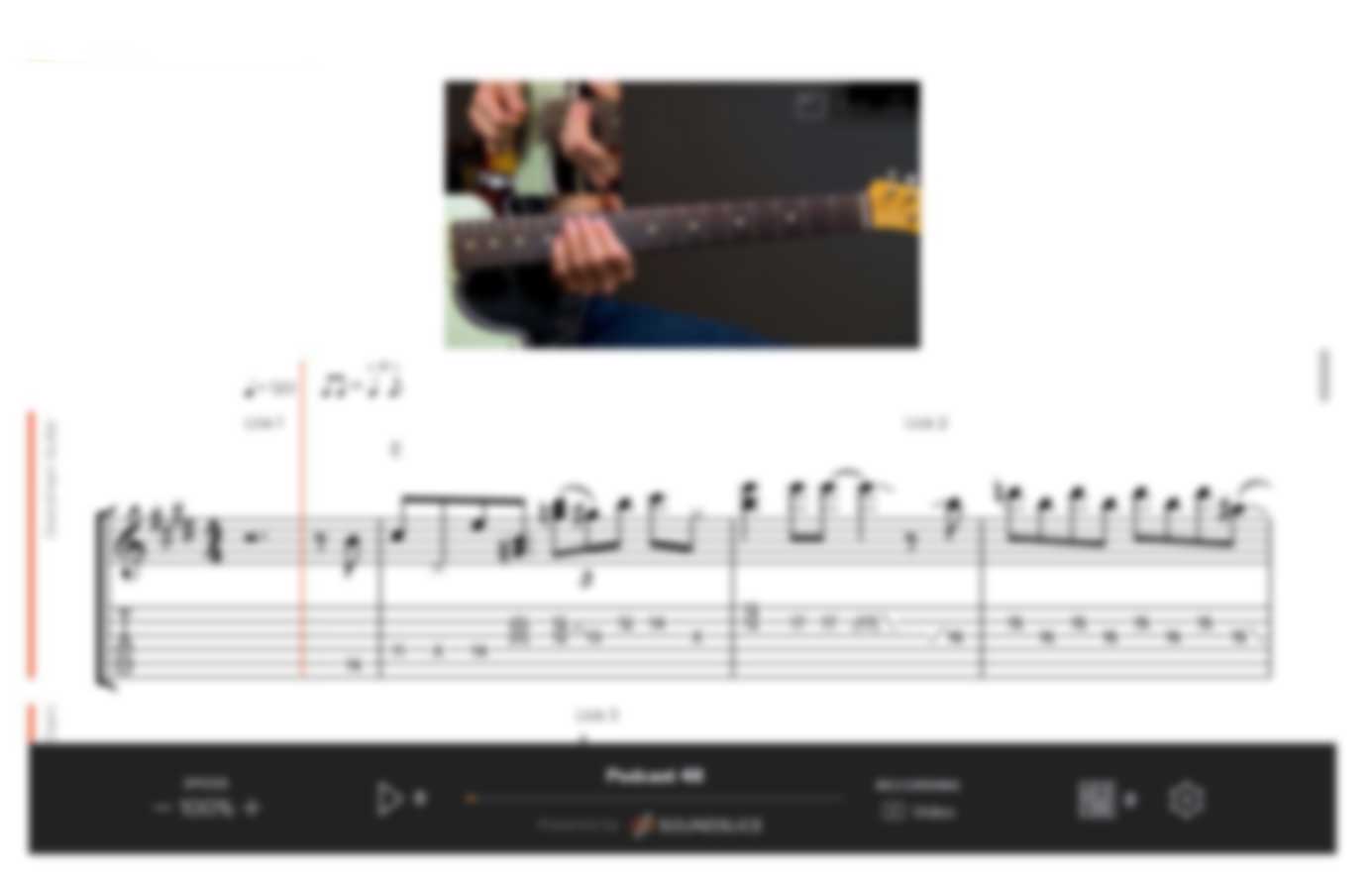
In this lesson, you will learn how to play an acoustic slide guitar solo in the key of D using drop D tuning. I cover essential techniques such as palm muting, hammer-ons, pull-offs, and backward slides, while emphasizing the importance of timing and rhythm with a swing feel. The lesson features a variety of phrases that utilize the open D string to create power chords and melodic lines, making it suitable for intermediate players looking to enhance their slide guitar skills. This lesson is a great resource for those interested in blues guitar and slide techniques, drawing inspiration from the versatility of open D tuning.

Read Full Transcript

WEBVTT Hey, guys, John here from LearningGuitarNow.com. And in this lesson, I want to show you how to play an acoustic slide guitar piece. It's in the key of D, and I'm using drop D tuning, but I'm only dropping the low E to a D string. So all the other strings are the same as standard tuning, just taking the low E and dropping it to a D.

And there's some really cool things that you can play with slide guitar when you do that. So it's very similar to playing in standard tuning slide, but you get some extra cool things you can do when you're playing in the key of D. You get that low open D string, makes some really cool patterns that you can use. Also, if you would like to start learning how to break out of the pentatonic first position box, check out my free blues guitar mini course, and you can find a link right in the description below.

Go ahead and take a look at a portion of the lesson for free, and if you would like the full lesson and interactive tab, check out the All Access Pass. When you become an All Access Pass subscriber, you also gain access to all the courses and lessons on the site, teaching you how to play blues guitar and slide guitar. Okay, let's go ahead and start this lesson. Okay, link two sounds like this.

Okay, so for lick two, this is the main groove. So before where we just kept playing kind of free time, now we're going to set into the groove, and this is a great exercise to do to practice playing some like this, staying in time, making sure everything sounds good, working on your hammer-ons here, that they're not killing everything, your pull-offs, your slides, backwards slides. There's a lot of techniques that make a great exercise to do daily if you are not really good at playing this kind of stuff. So I'm also palm muting just a touch on that first.

So that's our first little phrase, low E, I'm palm muting, muting, see all the strings below first, second, third finger, then our open A and open D string. Just doing that really, getting it down. And for the groove, we're counting this in four, four. I didn't play it to a metronome, I just played it by myself.

So it's basically that one, two, three, four, and then we're swinging the eighth notes, one, a two, a three, a four, a one. That rhythm right there. The other thing you have to watch out for is the slide hitting too hard like that. That's why you want to hammer on very kind of gently, and it helps to palm mute.

Anyway, I think it's a cool sound that you can do, that's a great exercise to work on. And those are triplets here, the hammer on to the third, you go one, two, triplet, like that. So it's just extremely important to get that little phrase down. So after you get that, you slide into our third fret here, then open D here, then low D.

Now we slide into our fifth fret of our A string, our D again, heavy vibrato, and then slide backwards to our third fret of the A string, release. So you got to keep these muted when I'm sliding and releasing, or I'm going to get, which is not terrible, but for this kind of a sound for this phrase, I want to have only that string ringing. One of the cool things about open D tuning is the first three strings here are going to give you a power chord, she got D, A, D, it's a root, five, root. So awesome power chord that you can play, has a really mean kind of a sound.

So that's another cool thing about open D tuning that you don't get with standard tuning, which has got these three open strings, power chord, and you hear that a lot of rock tunes as well as blues. So it's super versatile tuning, I think, for playing sly guitar. Anyway, back to the lick, we had this. We had that part right here, slide into third fret twice.

Now back to this. So the whole first phrase of lick two is this. That's the first two bars. Now the next two bars, the same first that we did like this again, now we're going to slide into the fifth fret of the D string, five, seven, and that's sliding into that three, two, oh, back to our fifth fret of the A string.

That same thing again, five, three, release to open string. And that's pretty much it for lick two. So a lot of cool things to learn in that little phrase right there. Just want to play it over and over again to get the feel of that.

Anyway, to me, it's a fun thing to play and it definitely builds your technique with your fingers doing that kind of a thing. Okay, that's it for lick two. Okay, well that does it for this lesson. Like I mentioned previously, if you'd like access to the full lesson, their interactive tab, the Guitar Pro PDF, check out the All Access Pass.

All right, thanks for watching and I'll see you next time.

Breaking Out of the Box FREE Course

Learn how to open up the entire fretboard in this FREE Blues Course
Join for Free

All Access Pass

Step by Step Lessons to help improve your blues playing.
Join Today